Abstract Shapes Seamless Patterns
When you are building a cohesive product line—whether you are designing a new collection of textiles, creating custom wrapping paper for a boutique brand, or developing digital assets for a stationery shop—consistency and repeatability are critical. Abstract shapes seamless patterns offer a reliable foundation for these workflows, and the Desert song collection delivers exactly that: a set of 15 high-quality, ready-to-use seamless patterns that can be applied across multiple materials and formats. This article walks through what these patterns are, how they fit into real creative and production processes, and how to integrate them smoothly into your projects.
What the Desert Song Collection Brings to Your Workflow
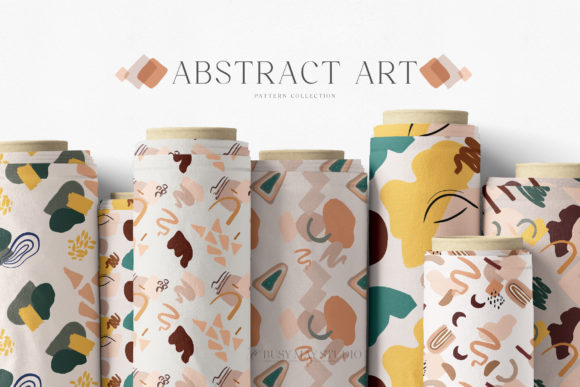
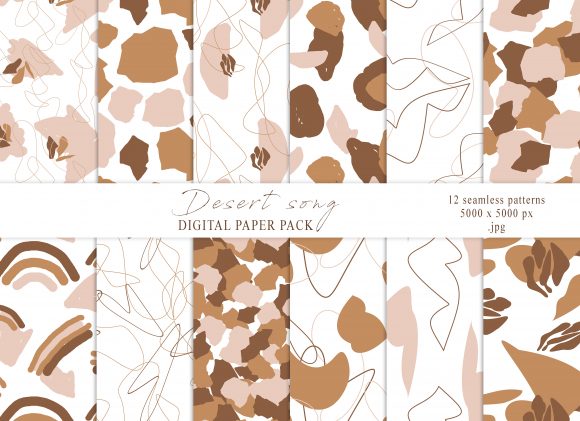
The Abstract Shapes Seamless Patterns collection, known as Desert song, is a curated set of 15 seamless patterns saved as high-resolution JPEG files at 300 dpi. Each pattern is designed to tile infinitely without visible seams, making them directly usable for fabric, textile design, wrapping paper, scrapbook paper, packaging, and wallpaper. The files come ready for download, and the patterns themselves are abstract, allowing flexibility across a wide range of visual styles.
For professionals, freelancers, and small business owners, the key value lies in the elimination of repetitive groundwork. Instead of spending hours creating seamless repeats from scratch, you can drop these patterns into your design software and focus on composition, color adjustment, and output. The high resolution (300 dpi) ensures that prints on large surfaces like wallpaper or bed linen remain sharp, while the JPEG format keeps file sizes manageable for quick previewing and sharing.
How Abstract Shapes Seamless Patterns Fit Before, During, and After a Project
One of the most practical ways to think about these patterns is through the timeline of a project. Whether you are preparing a new product line, executing a client order, or finalizing a batch of printed goods, Desert song can play a distinct role at each stage.
Before the Project: Planning and Asset Gathering
When you are still in the concept phase, having a library of reliable patterns gives you a head start. You can browse the 15 designs to see which abstract shapes align with your color palette and mood. Because the patterns are seamless, you can quickly mock up how a fabric or wallpaper will look across a large area without needing to fix repeat issues. This saves time during client presentations or internal approval rounds.
Additionally, understanding the printing medium early helps you decide whether a pattern needs scaling or recoloring. The JPEG format works well with most design tools, so you can import patterns directly into your workflow without conversion hurdles. If you are working with a print partner who requires specific file formats, you can easily convert these high-resolution JPEGs to TIFF or PDF while maintaining quality.
During the Project: Implementation and Adaptation
Once your design direction is set, the patterns become a core production asset. For textile designers, applying a seamless repeat to a fabric swatch in software like Photoshop or Illustrator is straightforward: drop the pattern layer, position it, and adjust the scale. The 300 dpi resolution ensures that even complex abstract shapes retain crisp edges when printed on fabric or paper.
For scrapbook paper or packaging designers, the patterns can serve as backgrounds or accent elements. Because the designs are abstract, they can be layered with other graphics, text (for display purposes only—text not included in the set), or textures. The seamless nature means you can extend a pattern across a full sheet or wrapping paper without worrying about misalignment at the edges.
Efficiency tip: Keep a copy of all 15 patterns organized in a dedicated folder within your design asset library. Tag them by style (e.g., organic shapes, geometric, fluid) so that you can quickly pull the right pattern for a specific client or product line. This organization pays off when you are working under tight deadlines or handling multiple projects simultaneously.
After the Project: Quality Control and Long-Term Use
After you have printed a batch of textiles or packaging, you may want to reuse the same patterns for different colorways or on different materials. Because Desert song is a downloadable set, you own the files indefinitely. You can revisit the same abstract shapes for future collections, seasonal releases, or restocks. This consistency builds brand recognition, especially if your product line uses a signature pattern style.
Quality control is also simplified. Each pattern has already been tested for seamless tiling, so you only need to verify that the print matches the digital file—no unexpected seams or misalignments. If you are producing fabric, check that the pattern orientation works with the fabric's grain. For paper goods, ensure the pattern aligns correctly with the cut lines. The high resolution (300 dpi) gives you margin for minor scaling adjustments without sacrificing sharpness.
Practical Implementation Tips for Different Media
The versatility of abstract seamless patterns means they can be applied to multiple substrates, but each medium has its own considerations. Below are workflow-specific observations for the most common use cases.
- Fabric and textile design: Use the patterns at full scale or scaled up for larger repeats. If the fabric is stretchy, test the pattern repeat on a small swatch first. The abstract shapes in Desert song tend to work well with both woven and knit fabrics because the irregular forms mask any slight distortion.
- Wrapping paper and scrapbook paper: For paper products, the 300 dpi JPEG can be printed directly onto paper stock using a home printer or commercial press. Because the patterns are seamless, you can tile them across a roll of wrapping paper without gaps. For scrapbooking, consider printing on adhesive-backed paper for easy application.
- Packaging: When designing boxes or bags, use the pattern as a wrap-around background. Scale the pattern so that the repeat aligns with the box faces. If the packaging is irregular, the abstract nature of the shapes helps camouflage any small adjustments.
- Wallpaper: Wallpaper requires precise repeats. Test the pattern at the intended scale on a vertical strip. The seamless tiling ensures that panels will match when hung side by side. The high resolution is particularly important for wallpaper because viewers see the pattern up close.
- Home goods such as bed linen and mugs: For bed linen, consider the direction of the pattern when the sheet is on the bed. For mugs, the pattern should wrap around the cylinder smoothly—abstract shapes often work better than rigid geometric patterns because they do not require exact alignment of straight lines.
Interacting with Other Tools and Resources
Abstract shapes seamless patterns are not meant to exist in isolation. They work best when integrated into a larger toolkit. Here’s how they interact with common resources:
- Design software: Photoshop, Illustrator, Procreate, Affinity Designer, and Canva all accept JPEG files. In Photoshop, you can define the pattern as a preset for quick application. In Illustrator, you can convert the JPEG to a vector pattern object (though the raster file remains high quality for most print purposes).
- Print-on-demand platforms: Services like Printful, Redbubble, or Society6 often require seamless patterns at 300 dpi for products like fabric, duvet covers, and wallpapers. Desert song fits those requirements out of the box. Just upload the pattern file and set the repeat area.
- Color management tools: While the patterns come as JPEGs, you may want to adjust colors to match your brand palette. Use a tool like Adobe Color or the hue/saturation adjustment in your editing software. Because the patterns are abstract, color shifts are less likely to disrupt the design intent.
- Physical printing partners: If you work with a local printer, they typically request high-resolution JPEG or TIFF files at 300 dpi. The Desert song patterns meet this spec. For fabric printing, confirm whether the printer uses a CMYK or RGB process—JPEGs can be converted accordingly with minimal quality loss.
Organizing Your Pattern Library for Efficiency
Over time, you may accumulate multiple pattern sets. Keeping them organized ensures you can find the right abstract design quickly. Create a master folder called Seamless Patterns – Desert Song and subdivide by color family or shape type (e.g., flowing curves, angular forms, dot-like clusters). Within each set, label the files clearly with numbers or descriptive names (e.g., desert-song-01-swirls).
If you frequently work on collaborative projects, consider storing the patterns in a shared cloud folder (Dropbox, Google Drive, or SharePoint) so that team members can access the same high-resolution files. Because the patterns are JPEGs, they are lightweight enough to preview quickly even on mobile devices.
Consistency Across Product Lines
One of the strongest arguments for using a cohesive collection like Desert song is brand consistency. If you produce multiple products—say, a line of tea towels, wrapping paper, and greeting cards—using the same abstract shapes seamlessly ties them together. The customer sees a unified aesthetic, which strengthens brand recognition. To achieve this, choose two or three patterns from the set that share a similar style (e.g., all patterns with organic, sand-inspired shapes) and apply them across different mediums. The 300 dpi resolution ensures that the patterns look professional whether printed on a small mug or a large wallpaper roll.
Useful Observations for Long-Term Use
The patterns in this collection are designed to be timeless rather than trend-driven. Abstract shapes, especially those inspired by natural forms (as implied by the name Desert song), tend to stay relevant across seasons. This makes them a solid investment for small business owners who want to reuse assets year after year without a dated look.
If you plan to sell products incorporating these patterns, keep in mind that the digital files themselves are for you to use as a creator. The patterns are intended for production; you print them on your chosen goods. The text in any mockups is for display only—you will add your own text for final packaging or branding. This separation of assets is standard and gives you control over the messaging.
Another observation: Because the patterns are seamless, you can create larger composites by combining multiple patterns from the same collection. For example, use one pattern as a background and another as an accent border. The abstract forms often complement each other visually, reducing the need for heavy manual blending.
Final Considerations for Smooth Integration
To get the most out of the Abstract Shapes Seamless Patterns from Desert song, treat them as a foundational resource rather than a one-use element. Build your production workflow around having these patterns ready to drop into any new project. Prepare templates in your design software with the patterns pre-loaded. Test prints on different materials early to confirm color accuracy. Keep backup copies of the original files.
Whether you are a textile designer planning a spring collection, a small business owner creating custom packaging, or a hobbyist making scrapbook pages, the combination of seamless tiling, high resolution, and abstract variety makes this set a practical addition to your digital toolkit. Integrate it into your asset library, follow the implementation tips above, and you will save time while maintaining professional quality across every print run.