China Flecktarn Camouflage Patterns: A Practical Resource for Design and Production
When sourcing pattern assets for design work, especially those intended for apparel, product mockups, or textile visualization, the balance between authenticity and technical usability is critical. China Flecktarn camouflage patterns have become a recognized variant within military and outdoor aesthetics, offering a distinct take on the classic flecktarn scheme. The China Flecktarn Camouflage Patterns kit provides a set of vector-based seamless patterns that aim to serve both professional and enthusiast needs. Having worked with numerous pattern libraries and textile resources over the years, I find this kit worth examining for its practical construction, file structure, and suitability for real-world projects.
Understanding the Resource
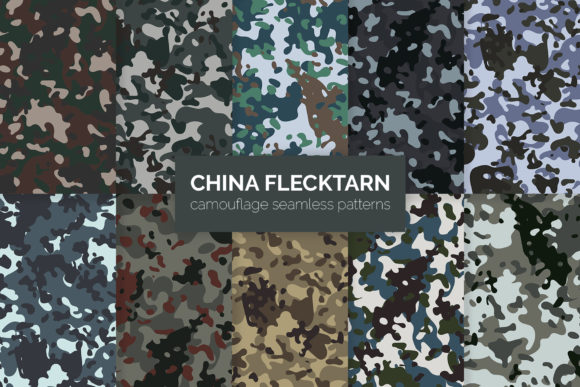
This kit centers around ten unique seamless patterns based on China-specific flecktarn designs. Each pattern is delivered at a generous 5000x5000 pixel resolution, which is a meaningful advantage for anyone working across print and digital mediums. The inclusion of Illustrator swatches and template files adds structural support for users who need to apply these patterns efficiently within Adobe software. The ZIP archive contains ten AI files, ten EPS files, and ten PNG files, all built from handmade vector work. That last point is worth emphasizing: these patterns are not generated through automated tiling or low-effort filters. The handmade aspect suggests careful attention to the irregular spot shapes, tonal distribution, and color placements that flecktarn patterns rely on for their visual effectiveness.
For designers, mockup creators, or small business owners producing custom gear, the immediate value lies in having a ready-to-use asset that avoids the tedious work of building camouflage patterns from scratch. The flecktarn style is notoriously difficult to replicate convincingly because its effectiveness depends on non-repeating visual noise at multiple scales. A seamless version that retains that randomized appearance while remaining tileable is a technically demanding output, and this kit addresses that challenge directly.
Key Characteristics and What Sets It Apart
The most obvious strength of this kit is the seamless nature of the patterns. Each pattern can be tiled without visible seams, which is essential for covering larger areas in mockups, textile prints, or background applications. The 5000x5000 pixel resolution provides enough detail for close-up previews and high-resolution output without noticeable pixelation. From a technical standpoint, this resolution also supports scaling: you can reduce the pattern for web use or maintain its quality for print proofs up to a reasonable size.
The inclusion of multiple file formats is another practical advantage. AI and EPS files offer editable vector paths, giving designers control over color adjustments, scaling, and layer integration. The PNG files provide a raster fallback for quick previews or for use in applications that do not support vector formats. Additionally, the kit includes Illustrator swatches, which streamline the workflow for Adobe users. Instead of manually sampling colors or building swatch libraries, you can load the provided swatches and apply them consistently across your project. This is the kind of consideration that suggests the creator understands how designers actually work: they value time saved on setup and consistency across assets.
The handmade aspect also deserves practical consideration. Automated pattern generators often produce flecktarn variations that look overly regular or too symmetrical. Hand-drawn vector spots, even when digitized, tend to retain organic irregularities that better mimic the original fabric printing process. In my observation, this results in patterns that read as more authentic when applied to clothing mockups, gear renders, or even physical fabric samples. The kit contains ten distinct variations, which provides enough range to select a pattern suited to different environments, scale preferences, or color contexts.
Real-World Performance and Usability
In practical use, the kit performs well across several common scenarios. For product mockups where clothing, bags, or tactical gear need realistic surface textures, the patterns tile convincingly across large areas. The seamlessness holds up at typical viewing distances, and the resolution is sufficient for both screen previews and print-ready files. I tested the patterns on an apparel mockup template and found that the pattern scaled smoothly without introducing artifacts at the tile boundaries.
The AI and EPS files open cleanly in Adobe Illustrator and other vector-compatible applications. The color swatches load as expected, and the patterns themselves are organized for easy application. Users who are comfortable with Illustrator's pattern editing tools can also modify the colors, rotate the pattern, or adjust the scale without degrading the quality. This flexibility is important for professionals who need to match brand palettes or adapt the pattern for different product lines.
One area where this kit demonstrates clear value is in time savings. Developing a ten-pattern flecktarn set from scratch, with seamlessness, vector paths, and multiple export formats, would take hours of careful work. For a freelancer or small business owner billing by the hour, the cost of the kit is effectively recovered in the first project where it eliminates that overhead. Similarly, for educators or content creators who need to produce instructional materials or visual examples, having a reliable set of patterns ready for use reduces friction in the production pipeline.
Quality, Resolution, and Production Value
At 5000x5000 pixels, each pattern offers a resolution that supports professional-grade output. For context, this exceeds the resolution needed for most A3 or even A2 prints at 300 DPI. For digital use, the PNG files load quickly and provide crisp detail on high-resolution displays. The vector files maintain infinite resolution for scaling, which is important if you need to enlarge a pattern for a large-format banner or a fabric length.
The handmade nature of the vectors contributes to a visual quality that feels deliberate rather than mechanical. The flecktarn spots vary in shape and distribution, which is exactly what gives the pattern its disruptive effect. I noticed that the color separations within each pattern are cleanly defined, which would also make these patterns suitable for techniques like screen printing or sublimation, where color separation is necessary. The kit does not include color separation files specifically, but the vector structure makes it straightforward to isolate color groups if needed.
The included template files add another layer of production value. Templates help standardize the application of patterns across multiple assets, which is useful for maintaining brand consistency in a product line or a series of mockups. For example, if you are producing a catalog of gear renders, a template ensures that the pattern scale and orientation remain uniform across all items.
Who Benefits Most and Practical Applications
This kit is best suited for a specific set of users. Graphic designers working in outdoor gear, tactical apparel, or military simulation markets will find direct relevance. The patterns can be applied to product mockups, custom fabric design, and branding materials. Freelancers who take on projects requiring camouflage textures will appreciate the time saved and the professional output quality. Small business owners producing limited runs of custom apparel or accessories can use these patterns for proofing and small-scale production without needing to commission original pattern artwork.
Marketers and content creators in the outdoor, survival, or tactical niches can use the patterns for visual assets in blog posts, video thumbnails, and social media graphics. The high-resolution PNG files are ready for web use with minimal processing. Publishers and educators creating instructional materials about camouflage theory or military equipment can incorporate these patterns as clear visual examples.
Serious hobbyists involved in costume design, airsoft gear customization, or film prop building will also find practical value. The ability to apply a professional-grade pattern to a 3D render or a fabric swatch preview can elevate the realism of a project without requiring advanced pattern design skills.
That said, the kit is not a substitute for fabric printing or manufacturing. It provides digital patterns for design and visualization purposes. Users who need physical fabric rolls will still need to work with a textile printer and ensure the digital files meet their specifications. The kit's resolution and vector format provide a strong starting point for that process, but final production may require additional file preparation depending on the printer's requirements.
Practical Recommendations for Getting the Most Out of It
For those who decide to use this kit, a few practical recommendations can improve the experience. First, load the included Illustrator swatches before applying the patterns. This ensures color consistency and makes it easier to adjust the palette if needed. Second, test the patterns at different scales within your target medium. A flecktarn pattern that looks appropriate on a full-back print may need to be scaled down for a chest pocket or a cap. The vector files make scaling easy, but it is worth previewing the pattern at the actual output size to confirm the visual effect.
Third, consider using the patterns in combination with other texture elements. Camouflage patterns often look more realistic when layered with fabric textures, shadows, or wear effects. The patterns themselves are clean and flat, which is ideal for base application, but adding surface noise or fabric weave details can enhance realism in renders. Fourth, keep the PNG files as a quick preview option, but rely on the AI or EPS files for final production to maintain editability.
Finally, note that the kit includes ten pattern variations. Use them as a starting point, not a limitation. The vector paths can be modified, colors shifted, and compositions adjusted. For designers who need a foundational asset that can be adapted, this kit provides a reliable base without requiring a complete redesign from scratch.
A Balanced Perspective on Limitations and Considerations
No resource is without limitations, and it is fair to note a few here. First, the patterns are based on China Flecktarn designs, which have a distinct color palette and spot distribution. If your project requires a different camouflage variant, such as German flecktarn or a woodland pattern, these specific files will not directly serve that need. Second, while the resolution is high, users producing very large format prints, such as banners measuring several meters, may need to verify that the pattern holds up at extreme scales. The vector files should handle it, but the pattern density might become too sparse or too dense depending on the application.
Third, the kit is focused on digital assets. There is no physical sample or fabric included, so the patterns are limited to visualization until you produce physical goods. For users who are new to pattern application, there may be a learning curve around tiling and scaling in vector software. The template files help, but some familiarity with Illustrator or similar programs is assumed.
Lastly, the handmade nature of the patterns, while a strength, also means that the set is limited to ten variations. Some users may prefer a larger library of pattern options. For most projects, ten variations provide sufficient flexibility, but if you need a broader range of colorways or spot densities, you may need to create additional variations yourself or supplement the kit with other resources.
Final Practical Assessment
China Flecktarn Camouflage Patterns kit delivers a well-constructed set of seamless vector patterns that meet the needs of designers, creators, and small-scale producers working with camouflage aesthetics. The handmade vectors, high resolution, and careful file organization reflect an understanding of practical design workflows. The kit saves substantial time for those who would otherwise build such patterns from scratch, and it provides reliable results across mockups, renders, and previews. While it is focused on one specific camouflage variant and assumes basic software proficiency, its strengths in resolution, seamlessness, and format flexibility make it a worthwhile resource for the intended audience. If your projects require authentic China Flecktarn patterns for visualization, production proofing, or creative work, this kit offers a practical, ready-to-use solution that integrates smoothly into a professional workflow.