German Camouflage Seamless Patterns: A Practical Guide for Designers and Creators
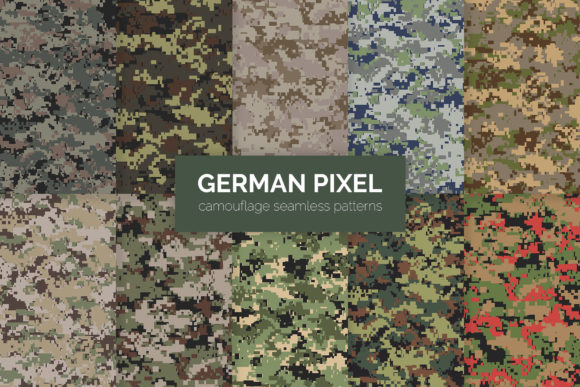
When working on projects that require military-inspired visuals, the choice of pattern can make or break the final result. German camouflage seamless patterns have long been a staple in fashion, game design, product mockups, and historical reproductions. The challenge lies not in finding any camouflage pattern, but in finding one that is both authentic and versatile enough to adapt to different media. This article explores one particular resource: a kit of German camouflage seamless patterns that includes 10 high-resolution vector files, swatches, and PNG previews. We will examine what sets this kit apart, how it compares to alternative approaches, and when it may be the right fit for your creative work.
What Defines This Set of German Camouflage Patterns?
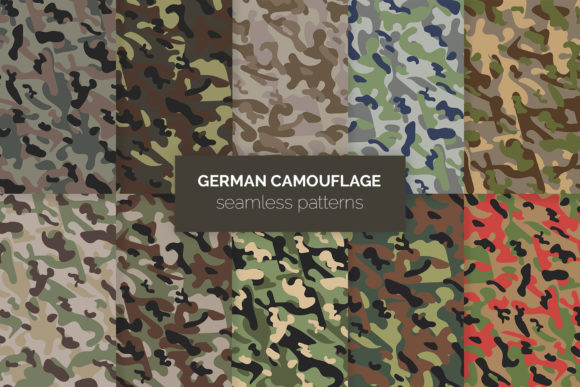
At its core, the kit offers ten distinct seamless patterns, each rendered at an impressive 5000x5000 pixels. The files come in AI, EPS, and PNG formats, making them usable across Adobe Illustrator, many vector editors, and directly in raster-based software. The inclusion of Illustrator swatches is a standout feature: instead of manually defining pattern fills, you can apply them with a single click. Each pattern is described as completely handmade, which suggests a level of detail and irregularity that machine-generated patterns often lack. The high resolution is particularly important for large-format prints or close-up mockups where pixelation would be distracting.
These patterns are not simply generic military greens and browns. They draw from historical German camouflage designs, such as the distinctive "splinter" or "oak leaf" styles, though the exact variants are not specified. For designers who need a ready-to-use library of authentic-looking textile repeats, this kit provides a consistent aesthetic across ten variations.
Comparing With Alternatives: Creating From Scratch vs. Using Pattern Kits
One of the first decisions a designer faces is whether to build camouflage patterns from scratch or to purchase a pre-made set. Creating your own offers complete control over colors, scale, and texture. You can design a pattern that matches a specific era, fabric weave, or environmental theme. However, that process is time-intensive. It requires either a deep understanding of vector pattern design or the use of specialized texture-generation software. The learning curve is steep, and mistakes in tiling can produce visible seams or unnatural repetition.
On the other hand, using a pre-made kit like these German camouflage seamless patterns saves hours of production time. The patterns are already tested for seamless tiling, which means you can fill an area confidently without worrying about edges. The vector format allows you to scale patterns infinitely, change colors if needed, and combine them with other vector elements. The tradeoff is that you sacrifice some uniqueness: thousands of other users may have the same patterns. For most commercial projects, however, small variations in the arrangement of splotches are rarely noticeable, especially when the pattern is used as a fill for clothing, backdrops, or product packaging.
Another alternative is using bitmap camouflage textures from stock photo libraries. These are often lower resolution and not seamless, requiring careful cloning or cropping. A 5000x5000 pixel seamless vector pattern clearly outperforms a 1024x1024 JPEG that repeats awkwardly. The PNG files included in this kit provide an instant preview, but for final output, the vector files give you the most flexibility.
Strengths of This Pattern Kit
- High resolution and scalability: 5000x5000 pixels is generous for both digital and print work. At 300 DPI, that's over 16 inches in print. The vector AI and EPS files can be expanded infinitely without quality loss.
- Immediate usability: With pre-made swatches, you can begin applying patterns right away. This is especially helpful for non-experts who may be intimidated by pattern creation.
- Consistent style across ten patterns: If a project requires multiple camouflage variations (for different garments, units, or seasons), these patterns share a coherent visual language.
- Handmade quality: Hand-drawn or hand-edited patterns often have organic irregularities that avoid the "computer-generated" look. This can be crucial for historical accuracy or high-end design where every detail matters.
Potential Limitations and Decision Factors
No resource is perfect for every situation. One limitation of this kit is that the patterns are fixed in color and design. While you can recolor a vector pattern in Illustrator, the underlying distribution of shapes is predetermined. If you need a very specific variant, such as a desert adaptation or a winter whitewash, you would need to manually adjust the colors or overlay textures. Some designers prefer kits that offer editable color groups or multiple colorways.
Additionally, the description does not specify which exact German camouflage patterns are included. There are numerous historical types: Heeres-Splittermuster 31, Leibermuster, Buntfarbenaufdruck, and others. If you require an accurate reproduction of a particular pattern for a museum exhibit or a historically themed game, you may need to verify the patterns against reference materials. For general commercial use, the aesthetic is likely sufficient, but purists might find mismatches.
Another factor is the file format compatibility. AI and EPS are industry standards, but not everyone uses Adobe software. Users of Affinity Designer, CorelDRAW, or free tools like Inkscape may need to convert files. EPS is generally more universal, but some features like swatches may not transfer perfectly. The included PNG files serve as a fallback, but they are raster and may not scale beyond 5000 pixels without interpolation.
Finally, the kit contains ten patterns. For a large project, ten patterns might be enough. For a designer who needs fifty variations for a video game with many factions or camouflage types, this kit may only serve as a starting point. In that case, the patterns could be used as base textures that you then modify – replicating, rotating, and blending them to create new variants.
When This Kit Is the Right Choice
This collection of German camouflage seamless patterns is best suited for designers who:
- Need ready-to-use, high-resolution patterns for mockups, such as clothing previews, product packaging, or website backgrounds.
- Work with vector-based workflows and want to keep files editable for future changes.
- Value authenticity and handmade qualities over generic stock textures.
- Have a tight deadline and cannot spend hours building patterns from scratch.
- Are creating a range of items that require a unified camo aesthetic (e.g., a fashion line, a military-themed game asset pack, or a fabric collection).
For example, consider a graphic designer preparing a pitch for a tactical apparel brand. They need to show realistic mockups of jackets, pants, and accessories in different camouflage patterns. Using this kit, they can quickly fill garment layers in Illustrator with authentic-looking patterns, scale them to fit different views, and adjust colors to match the brand's palette. The high resolution ensures that when the client looks at the mockup at 100% zoom, the pattern remains crisp and detailed. Without such a resource, the designer would either have to cobble together texture images or spend days on pattern creation – both risky under time constraints.
Another scenario: an indie game developer is building a World War II-themed survival game. They need environmental textures for tents, vehicle skins, and character uniforms. The ten patterns can be used directly as diffuse maps or modified in a tool like Substance Painter. The seamless nature means the patterns will tile properly on 3D models without visible seams, saving hours of UV editing. The PNG files can be dropped into Unity or Unreal Engine with minimal fuss.
When You Might Need Another Option
If your project demands absolute historical accuracy, you may need to commission custom patterns or use reference scans from original textiles. Pre-made kits, no matter how well-crafted, cannot guarantee fidelity to a specific date, factory, or batch. Similarly, if you require animated camouflage (e.g., shifting colors or sizes), vector patterns alone won't suffice; you would need a procedural approach in a shader or particle system.
For budget-conscious users, the price of a premium pattern kit might be a concern. However, when weighed against the hours of labor it saves, many professionals find it a worthwhile investment. There are free alternatives available online, but they often come with low resolution, poor tiling, or questionable usage rights. This kit provides clarity in licensing for commercial work, which is an important consideration.
Practical Tips for Getting the Most Out of These Patterns
To maximize the value of this resource, start by importing the AI swatches into your Illustrator workspace. Then, create an artwork that uses multiple pattern swatches – for example, a jacket with one camo and pants with another – to see how they interact. Remember that you can scale the pattern independently from the object using the Scale Tool or the Transform panel. Because the patterns are vector, you can also apply effects like grain, texture, or slight color deformations to make them look more like printed fabric rather than flat vector fills.
For Adobe Photoshop users, the EPS or AI files can be placed as smart objects, which retain their vector properties. Alternatively, the PNG files can be used as raster layers, but be aware that scaling up beyond 5000 pixels may require careful interpolation settings. The seamless nature means you can fill large canvases with pattern layers and then mask them, creating cutouts for logos or weathering.
If you are a surface pattern designer, consider using these German camouflage seamless patterns as a base for creating derivative designs. For instance, combine elements from two different patterns, or overlay a noise texture to simulate woven fabric. The possibilities extend beyond military use: fashion designers have incorporated camo into streetwear, and interior designers sometimes use muted camouflage as accent wall patterns.
Final Thoughts
Choosing the right camouflage pattern resource is a matter of balancing authenticity, convenience, and flexibility. This kit of ten German camouflage seamless patterns stands out for its high resolution, handmade details, and format variety. It is not a one-size-fits-all solution, but for a wide range of professional projects – from mockups and apparel design to game assets – it offers a solid foundation. The decision ultimately hinges on your specific needs: how many patterns you require, how much control you need over the design, and whether the time saved is worth the investment. By understanding these tradeoffs, you can confidently select the approach that best supports your creative vision.